Slow Steep
Combine room-temperature water and botanicals in a sealed jar for several hours. Strain before serving over ice if desired.
Water temperature, vessel shape, and timing influence aroma and mouthfeel. These guides describe sensory outcomes—not physiological effects.
Select a range to view steeping guidance suited to different leaf and root textures.
Delicate floral and green notes open gently at lower temperatures. Steep 2–4 minutes and taste frequently.
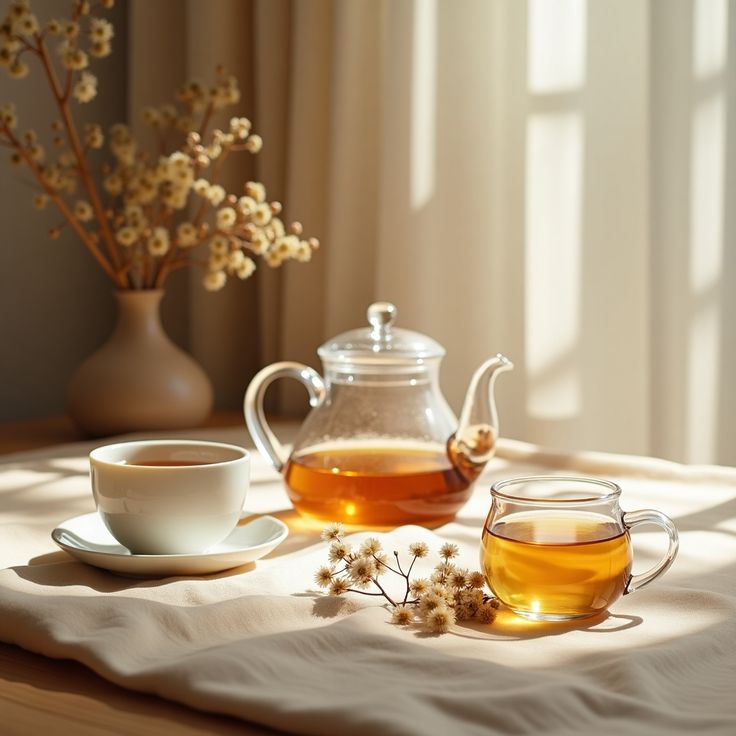
Ideal for observing color development during short infusions. Retains heat moderately; best for visual learners.
Maintains stable temperature for longer sessions. Pairs well with bold root blends and spice-forward recipes documented in our library.
Neutral flavor impact and comfortable grip for daily rituals. We suggest pre-warming cups before serving.
Convenient for coarse botanical mixes. Use gentle plunging to avoid bitterness from over-agitation—taste, then adjust time on the next batch.
Start with one teaspoon of loose botanical per 240 ml of water. Increase incrementally while noting aroma intensity in a journal.
Light blends may need less material; dense roots may need slightly more. Our educational products include printable ratio cards for reference.
Combine room-temperature water and botanicals in a sealed jar for several hours. Strain before serving over ice if desired.
Prepare a warm infusion, then cool rapidly in a bath of ice water. Preserves brightness in floral recipes.
Refrigerate sealed infusions up to 24 hours for next-day enjoyment. Label jars with date and botanical list.
Reduce steep time or lower temperature on the next attempt. Bitterness is a flavor signal, not an indicator of health impact.
Verify water freshness and increase botanical amount slightly. Compare with a fresh sample from your supplier.
Some roots naturally cloud water. Fine straining or resting the liquid can improve clarity for presentation.
Home brewing invites experimentation. Document changes so you can reproduce enjoyable results without relying on generic rules.
Review allergen information on packaging, store botanicals in cool dry places, and discontinue use of any ingredient that appears compromised.
Our content does not address disease prevention, symptom management, or clinical dosing. U.S. readers with medical conditions, pregnancy, or medication use should consult a licensed physician before trying new botanical ingredients.
Introductory steeping laboratory
Advanced ratio calibration
Seasonal equipment care
Group tasting facilitation skills
Workshops are recreational and skill-oriented. Contact us for schedules and enrollment details.
Visit the herbal library to match steeping techniques with ingredient characteristics.